
clinical trials have tried to break the tumour-shielding barrier.
The science
Cancer hides
in plain sight.
Tumour proteins contain shielding regions that block the immune response. We have designed a way to remove them.
Why current therapies fail
A fundamental design flaw.
Cancer vaccines are a compelling idea in principle – train the immune system to recognise and destroy tumour cells while leaving healthy tissue unharmed. In practice, most have delivered little clinical benefit.
The core reason is that many tumours are shielded from the immune response. Shielding regions in tumour proteins actively protect the tumour from immune attack.
This is not a delivery problem or a manufacturing problem. It is a fundamental design flaw in the molecular targets used in most cancer vaccines.
has received FDA approval.
The Unveil breakthrough
We make the invisible visible.
Our proprietary DNA constructs un-shield tumour proteins, promoting a specific immune response that enables tumour cell destruction.
01
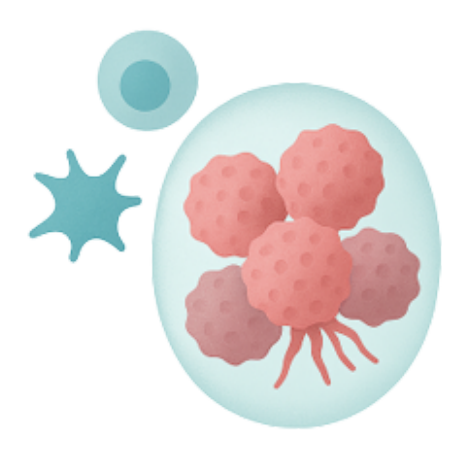
Tumours are naturally shielded
Shielding regions within tumour proteins block the immune system from attacking cancer cells.

02
Machine learning removes the shields
Our proprietary ML algorithms re-engineer tumour protein sequences, removing the shielding regions.

03
The immune system can attack
A DNA vaccine encodes the optimised tumour protein, allowing immune destruction of the tumour.
Our platform
Built to scale beyond a single cancer.
Proprietary Algorithm
ML algorithms that identify and remove shielding regions from tumour protein sequences.
DNA constructs
Plasmid DNA vaccines encoding optimised tumour proteins, with no device requirement.
Broad patient coverage
Designed to work across patients rather than being restricted to individual profiles.
Off the shelf
No personalised manufacturing, enabling scalable supply.
Research collaboration
Supported by Professors at the University of Liverpool.
Our established scientific collaborators give us direct access to patient samples and world-leading tumour immunology expertise.